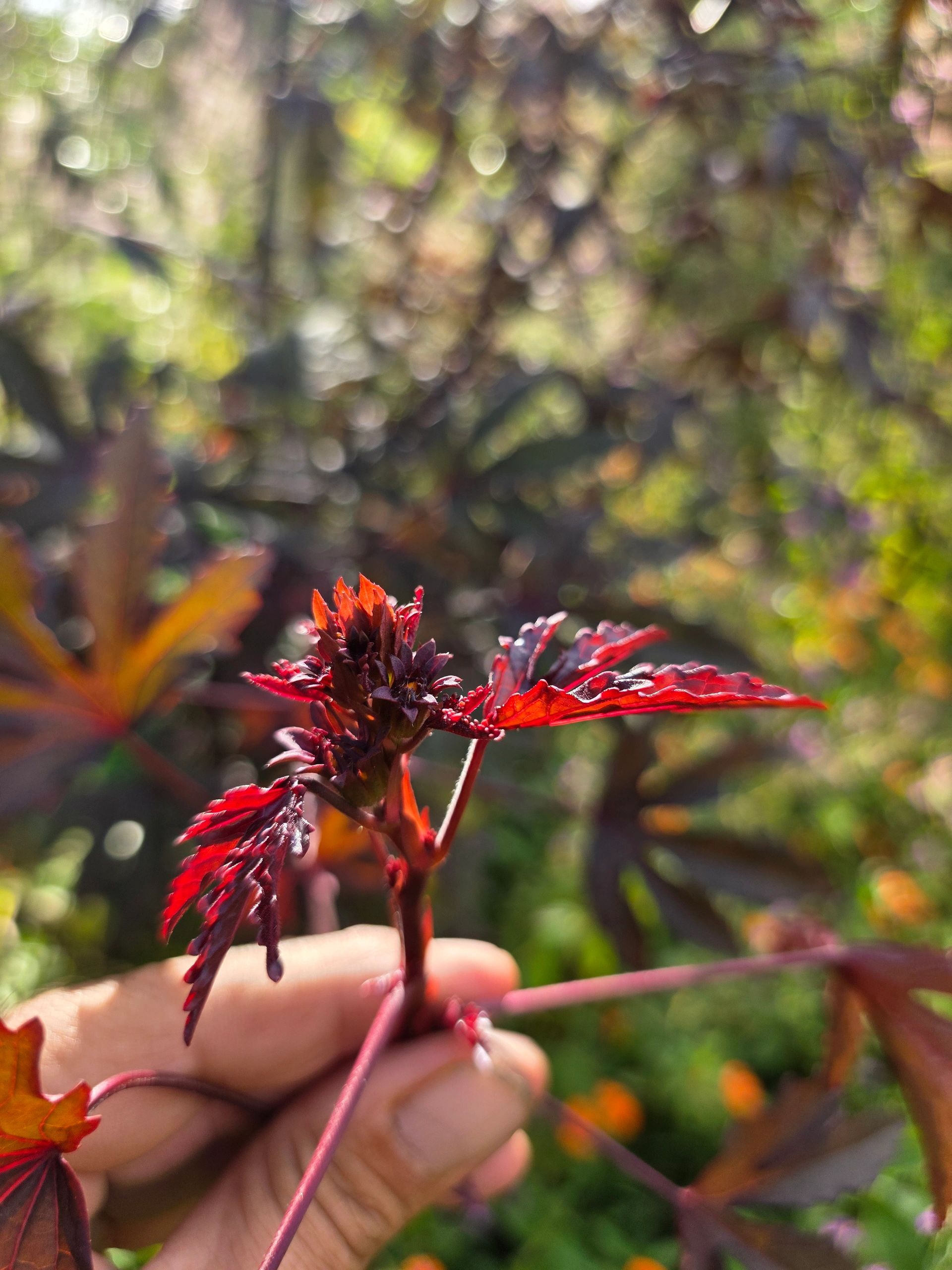
The youngest, brightest leaves of Cranberry Hibiscus (Hibiscus acetosella) are a biochemical treasure chest—miniature antioxidant reactors operating at peak vitality. Here’s the science behind why we select only those baby tips:
🌿 1. Peak Phytochemical Density
When a hibiscus leaf first emerges, its cellular metabolism is in overdrive. The plant is actively synthesizing polyphenols, flavonoids, anthocyanins, and organic acids as defense molecules against UV light, herbivory, and oxidative stress.
These compounds are most concentrated at the growth apex—the tender red-green tips—before the leaf lignifies (hardens) and redirects its resources toward structure rather than protection.
Specifically, delphinidin-3-sambubioside and cyanidin-3-glucoside, two major anthocyanins responsible for the leaf’s pink-crimson hue, are up to 5–7× higher in juvenile tissue than in mature leaves.
💎 2. Superior Bioavailability
The cell walls in young leaves contain more pectins and hemicelluloses and less lignin and cellulose, meaning:
The antioxidant molecules are less trapped in rigid fiber matrices.
During our cold-infusion and emulsification processes, they release more efficiently into the lipid phase of Fruity Puppy cream.
Result: higher transfer of pigment-linked antioxidants into the final formulation.
⚗️ 3. Optimal Anthocyanin Stability
Anthocyanins are pH-sensitive and degrade with oxidative stress and age. By harvesting only the tender, vividly colored tips, we capture them before enzymatic oxidation begins.
Mature leaves accumulate more polyphenol oxidase (PPO) and peroxidase enzymes, which can brown or destabilize the pigments.
Young leaves, with lower enzyme activity, preserve the brilliant pink hue that translates to the subtle natural tint in our cream.
💧 4. Ideal Antioxidant Synergy
The baby leaves also contain a precise ratio of vitamin C, malic acid, and anthocyanins that form a natural redox buffer.
Vitamin C acts as a reducing cofactor, recycling oxidized anthocyanins back to their active antioxidant state.
Malic acid stabilizes pigment structure through chelation and pH balance.
This triad amplifies the electron-donating capacity of the extract—essentially giving your skin more molecular “shield power.”
🌺 5. Energetic Freshness
From a biophotonic perspective (and this is where Ipo wags her tail), the apical leaves emit the highest photon flux density—the literal light energy captured from photosynthesis.
That light energy is transduced into bioactive resonance at the molecular level, meaning our extracts carry more “living voltage.”
In skincare chemistry terms: that translates to fresher electron donors, less oxidative decay, and a more vibrant feel on the skin.
💖 In short:
The vivid baby leaves are biochemically alive, structurally permeable, and pigment-saturated, making them the perfect extraction source for our antioxidant-rich, naturally tinted Fruity Puppy blend.